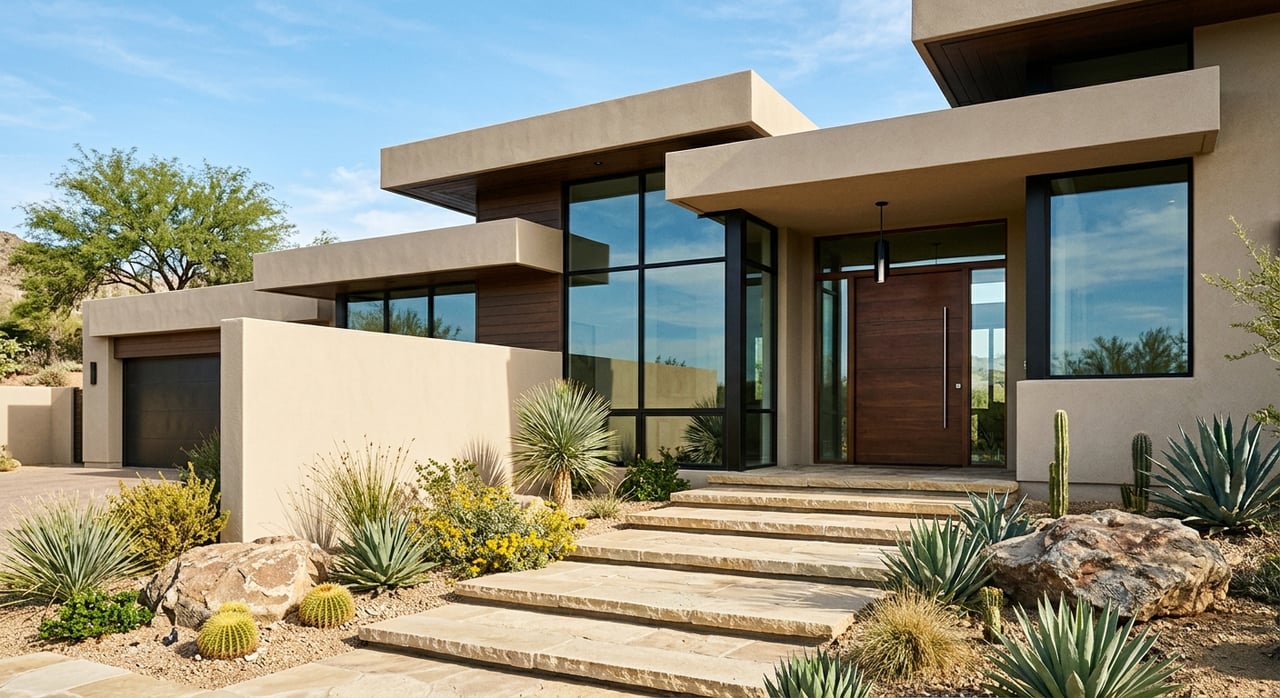
If you look at Las Vegas luxury headlines alone, it is easy to get the wrong read on the market. A rising luxury median price can make things sound fast and fierce, but many high-end homes are still taking time to sell, and the real story often sits inside each individual community. If you want to buy smart or sell with confidence, you need to know which numbers matter most and how to compare them. Let’s dive in.
Start With the Right Luxury Definition
In Las Vegas, luxury is not one fixed price point. Redfin defines luxury as the top 5 percent of a metro area’s price range, which means the threshold can shift as the market changes.
That matters because a price that feels premium in one part of the valley may be more entry-level in another. A $1 million home can land very differently depending on whether you are looking at communities like Queensridge, MacDonald Highlands, Spanish Trail, Red Rock Country Club, Anthem Country Club, or Sun City Summerlin.
Compare Within the Same Community
The best way to read the luxury market is to compare a home to similar homes in the same community, product type, and price range. Valley-wide averages can be useful for background, but they are too broad to tell you whether one specific listing is truly well positioned.
For example, a guard-gated property and a golf-front home may both fall under the luxury umbrella, but buyers do not evaluate them the same way. Community context shapes pricing, pace, and buyer expectations.
Read Days on Market the Right Way
Days on market can tell you a lot, but only if you use it correctly. In the three months ending April 30, 2026, Las Vegas luxury homes went under contract in a median 97 days, which was 31 days slower than the year before.
That is noticeably slower than the broader Las Vegas market, where homes were pending in about 54 days and selling in about 62 days, with average sale prices about 2 percent below list. So if you compare a luxury home only to the general market, you may think something is underperforming when it is actually moving at a normal luxury pace.
Neighborhood Baselines Matter More
Luxury communities across the valley move at different speeds. Around the same period, Queensridge averaged 80 days on market, MacDonald Highlands 72 days, Spanish Trail 91 days, and Red Rock Country Club at Summerlin 75 days.
That means a 90-day listing is not automatically stale. In one neighborhood it may be slightly above normal, while in another it may be very close to the expected pace.
What Longer Market Time Usually Means
When a listing sits well beyond the local norm, the market is usually sending a message. Most often, that message points to one of three issues:
- The asking price is too aggressive
- The presentation does not support the price point
- The buyer pool is narrower than expected
The reverse is true too. Some luxury homes still move much faster than the neighborhood average, especially when pricing and presentation line up with what buyers want.
Use Sale-to-List Ratio to Gauge Leverage
Another key number is the sale-to-list ratio. This shows how close final sale prices are landing to asking prices, which helps you understand how much negotiating room may exist.
Clark County’s median sale-to-list ratio is 0.987, or about 1.3 percent below list on a median basis. That suggests a market that is not far from balanced at the county level, but luxury communities can tell a different story.
What the Ratios Look Like in Luxury Areas
Some communities are showing more discounting than the county baseline. Current data shows:
- Sun City Summerlin at 0.976, or about 2.4 percent below list
- Queensridge at 95.3 percent, or about 4.7 percent below list
- Spanish Trail at 94.4 percent, or about 5.6 percent below list
- Red Rock Country Club at Summerlin at 93.9 percent, or about 6.1 percent below list
A ratio near 98 percent often points to a more balanced setup. Ratios in the mid-90s usually suggest buyers may have more room to negotiate.
Why One Ratio Never Tells the Whole Story
Even in a softer community, a well-positioned home can still sell near list. Strong presentation, realistic pricing, and a floor plan or setting that stands out can narrow the gap.
That is why you should treat the ratio as a signal, not a verdict. It helps you understand leverage, but it works best when paired with days on market and current inventory.
Watch Inventory for Buyer and Seller Power
Inventory is often the clearest clue to who has more leverage. At the metro luxury level, Las Vegas posted a median luxury sale price of $1,734,559 in the three months ending April 30, 2026. Over that same stretch, active luxury listings were down 1.9 percent year over year, new listings were down 13.2 percent, homes sold were down 14.3 percent, and days on market were up 31 days.
That mix points to a selective market. Fewer fresh listings are coming on, but homes are still taking longer to absorb, which suggests buyers are being careful and price-sensitive.
Inventory Looks Very Different by Community
Current listing counts vary sharply across Las Vegas luxury communities. Zillow shows:
- 39 results in Queensridge
- 66 results in Spanish Trail
- 131 results in MacDonald Highlands
- 165 results in Anthem Country Club
- 212 results in Sun City Summerlin
- 240 results in Red Rock Country Club
Smaller inventory counts usually mean buyers have fewer direct alternatives. Larger counts usually create more competition among sellers and more negotiating room for buyers.
Use the County Baseline for Context
Clark County currently shows 12,445 homes for sale and 32 days to pending. That broader number gives you a useful backdrop before you zoom into a gated or golf community.
Still, the neighborhood count matters more when you are evaluating a luxury listing. A seller in a community with a lot of active options needs to be sharper on pricing and presentation from day one.
Be Careful With Median Prices
Median sale prices can be helpful, but they can also be misleading in luxury neighborhoods. The reason is simple: the number of recent sales is often small.
Redfin’s April 2026 community pages show just 20 sales in Queensridge, 37 in MacDonald Highlands, 19 in Spanish Trail, and 18 in Red Rock Country Club at Summerlin over a recent three-month window. With sample sizes that small, one or two standout sales can move the median in a big way.
Focus on More Stable Signals
If you want a cleaner read on the market, pay closer attention to inventory, days on market, and sale-to-list ratios. Those indicators usually give you a steadier picture than one quarter’s median price alone.
This is especially important in luxury, where no two homes are exactly alike. View, lot, design, updates, and community location can all create big pricing differences.
What This Means if You Are Selling
If you are preparing to sell a luxury home in Las Vegas, the biggest mistake is pricing from a headline instead of from your immediate competition. Buyers in this segment tend to compare carefully, and if your home lingers beyond the neighborhood norm, the market may be telling you to adjust.
Look at three things together:
- How long similar homes in your community are taking to go under contract
- How far final sales are landing below list nearby
- How many competing homes buyers can choose from right now
If all three point toward more buyer leverage, your pricing and presentation need to reflect that early. In luxury, chasing the market down after a long listing period can be more costly than launching at the right level.
What This Means if You Are Buying
If you are shopping for a luxury home, the same numbers can help you spot opportunity. A community with 90-plus days on market or a large number of active listings may give you more room to negotiate, especially if a property has already had a price cut.
That does not mean every seller is flexible. A standout home in the right setting can still move fast and attract strong terms. But when inventory is deep and sale-to-list ratios are softer, you may have more leverage than the headline luxury market suggests.
How To Combine the Signals
The clearest way to read the Las Vegas luxury market is to separate valley-wide trends from community-level signals. Start broad so you understand the overall direction, then narrow your focus to the neighborhood where the home sits.
From there, combine these three markers:
- Days on market to measure pace and liquidity
- Sale-to-list ratio to estimate negotiating room
- Inventory to understand buyer choice and seller competition
When those numbers line up, the market becomes easier to read. You can tell whether a home is priced for today’s conditions or still anchored to last season’s expectations.
If you want help reading the numbers in your specific neighborhood, Michael Boyle offers buyer and seller representation, home valuations, and local insight across Las Vegas luxury communities.
FAQs
How should you define luxury in the Las Vegas housing market?
- Luxury works best as a relative category, not one fixed price. In Las Vegas, it should be judged by the top end of the metro market and then refined by the specific community, home type, and price band.
What do days on market mean for Las Vegas luxury homes?
- Days on market show how quickly homes are moving, but in luxury they should be compared to the neighborhood baseline, not the broader valley average. A 70- to 100-day timeline can be normal in some Las Vegas luxury communities.
How do sale-to-list ratios help luxury buyers and sellers in Las Vegas?
- Sale-to-list ratios show how close homes are selling to asking price. Ratios near 98 percent can suggest a more balanced market, while ratios in the mid-90s often point to more room for negotiation.
Why is inventory important in Las Vegas gated and golf communities?
- Inventory helps show who has more leverage. Fewer active listings usually mean less room for seller mistakes, while larger listing counts often give buyers more options and stronger negotiating power.
Are median prices reliable in Las Vegas luxury neighborhoods?
- Median prices can be less reliable in luxury because the number of recent sales is often small. Inventory, days on market, and sale-to-list ratios usually offer a steadier read on current conditions.
Can a Las Vegas luxury home still sell quickly in a slower market?
- Yes. Even when average market times are longer, well-priced and well-presented homes can still go under contract faster than the neighborhood average.