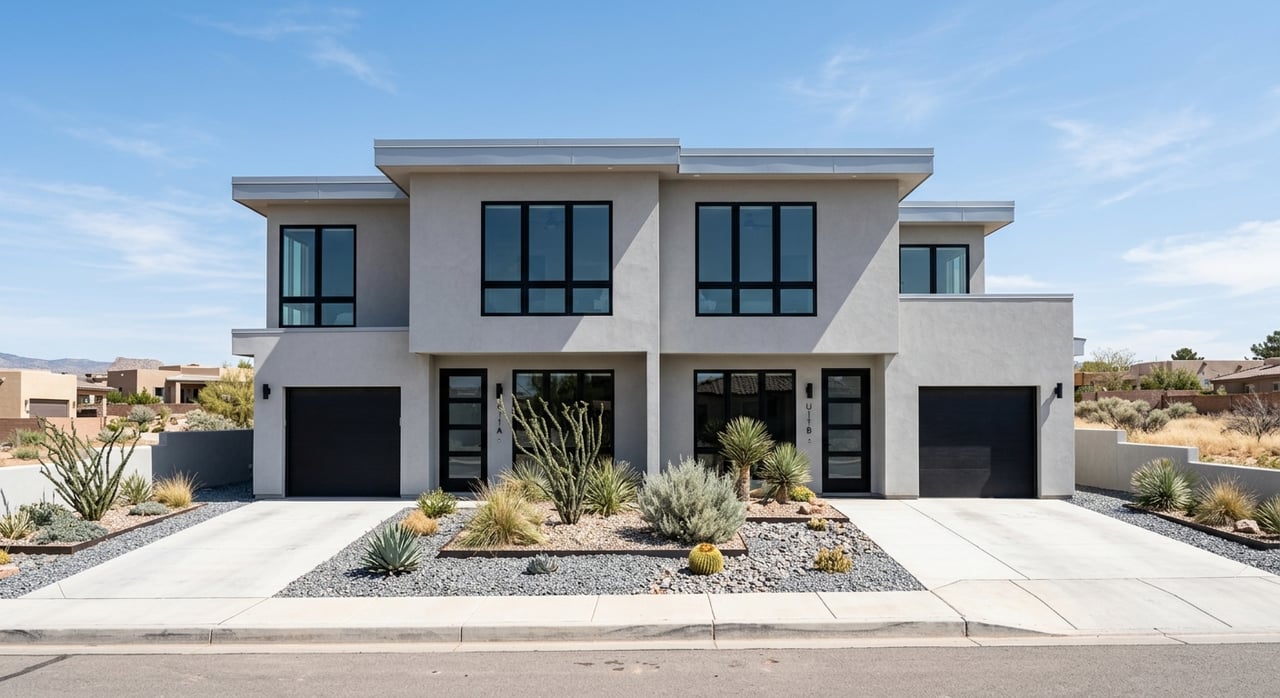
Looking at investment property in North Las Vegas can feel simple at first glance. Prices often sit in a familiar range, rental demand is real, and the city keeps growing. But a good investment is not just about finding a house for sale. It is about knowing how price, rent, condition, and location work together in this specific market. If you want a clearer way to size up opportunities and avoid weak deals, this guide will help you focus on what matters most. Let’s dive in.
Why North Las Vegas Gets Investor Attention
North Las Vegas is a large and growing city. Census QuickFacts estimated the population at 294,034 as of July 1, 2024, and the city describes itself as home to nearly 300,000 residents. Growth alone does not guarantee a strong investment, but it does create a bigger pool of housing demand.
The local economy also gives investors a practical reason to pay attention. North Las Vegas is a major industrial and logistics hub, with major distribution centers tied to companies such as Amazon, Kroger, Hey Dude/Crocs, and Fortune Brands. The city also points to Apex Industrial Park, an 18,000-acre project with 28.5 million industrial square feet completed, under construction, or planned.
Another major demand anchor is Nellis Air Force Base. The base employs about 14,000 military and civilian personnel and supports a total military population close to 60,000 when family members and retirees are included. For investors, that means housing demand is supported by more than one source.
What the Current Market Looks Like
If you are evaluating deals in North Las Vegas, start with the broad pricing picture. Recent resale values suggest a practical working range of about $400,000 to $420,000 for a typical home in spring 2026. Redfin reported a three-month median sale price of $418,749 in May 2026, while Zillow reported a median sale price of $402,667 and a typical home value of $408,306 as of May 31, 2026.
This is not an extremely overheated market based on the data provided, but it is still active. Redfin said homes receive about one offer on average and sell in around 46 days. Zillow reported homes going pending in around 26 days.
For investors, that tells you two things. First, you may have room to analyze rather than rush blindly. Second, a property priced above the market range needs a clear reason for the premium.
Why Rent Analysis Matters Here
Rent underwriting is especially important in North Las Vegas. Census QuickFacts lists median gross rent at $1,705 for 2020 through 2024, while the Nevada housing report lists median contract rent at $1,508. These are different metrics, but together they suggest you should be careful and realistic when projecting income.
The same housing report shows 55.9% of renters are cost-burdened, and 45.2% are excessively cost-burdened. HUD’s FY2026 two-bedroom fair market rent for the Las Vegas-Henderson-North Las Vegas metro area was $1,735. That does not mean every property can achieve that level, but it gives you a useful benchmark when comparing expected rent to asking price.
A deal can still work below these figures. You just want a clear reason why, such as smaller size, older finishes, or a property type that commands lower rents. If your projected rent only works under best-case assumptions, the numbers may be too thin.
A Simple Framework for Evaluating Deals
Start With Price
Look at both total price and price per square foot. In spring 2026, the reported local range was about $229 to $234 per square foot. If a property is well above that, ask what you are actually buying.
Sometimes the premium makes sense. A newer build, a larger lot, stronger interior finishes, or better employment access may justify a higher number. The key is to match the premium to something real, not just seller optimism.
Test the Rent Carefully
Once price looks reasonable, move to rent. Compare projected rent against the local median contract rent of $1,508 and the two-bedroom fair market rent benchmark of $1,735. This helps you stay grounded in what the market may support.
If a listing is marketed as a great investment but only pencils out with aggressive rent assumptions, pause there. Conservative underwriting is often what separates a stable buy from a stressful one.
Study Condition and Future Costs
North Las Vegas housing stock is relatively recent, but not brand new across the board. The Nevada housing report estimates 66.1% of units were built between 1990 and 2009, and the median year built is 2003 for owner-occupied units and 1999 for renter-occupied units.
That age range matters. Many homes may look modern enough from the street, but investors should still pay close attention to roofs, HVAC systems, flooring, paint, and deferred maintenance. In this market, repair and replacement costs can quickly change the quality of a deal.
Evaluate Employment Access
Location is not just about appearance or curb appeal. In North Las Vegas, it also means access to jobs and major transportation routes. Properties with easier access to Apex, Nellis-related employment, and the I-15 and US Highway 11 corridor may have broader rental appeal than similar homes in more isolated areas.
This does not mean every property near those areas will outperform. It means employment access should be part of your evaluation, especially if you are choosing between two homes with similar pricing.
What Types of Properties You Will See Most Often
North Las Vegas is largely suburban in character. The Nevada housing report says 79% of the housing stock is single-unit detached or attached, while 19.7% is two-unit-or-more housing and 1.2% is mobile homes.
Within occupied units, 75.5% are one-unit detached and 3.5% are one-unit attached. Only a smaller share falls into the three-to-four-unit or larger multifamily categories. For investors, that usually means more single-family and tract-home opportunities than classic small multifamily inventory.
That matters because your strategy may need to match the market. If you are looking for duplexes, triplexes, or fourplexes, you may need a wider search and faster underwriting. If you are open to single-family rentals, the available inventory may align more naturally with the local housing stock.
Supply, Vacancy, and Long-Term Demand
The city’s housing report points to real pressure in both ownership and rental housing. In 2023, owner-occupied vacancy was 0.7% and renter vacancy was 4.8%. The same report projected a need for 3,612 additional dwelling units by 2029, including 2,211 for-sale units and 1,061 rental units.
Those numbers suggest demand has not been fully met. For investors, low owner vacancy and projected housing need can support the case for long-term relevance in this market. At the same time, supply pressure does not excuse overpaying, so discipline still matters.
Red Flags to Watch When Underwriting
Even in a market with growth and demand drivers, weak deals still show up. Watch for these common issues when evaluating North Las Vegas investment properties:
- Asking prices that sit clearly above the local market range without a strong reason
- Rent projections that assume top-of-market performance without supporting features
- Older systems or visible deferred maintenance that could raise near-term capital expenses
- Listings that emphasize appreciation potential but do not work on current numbers
- Small multifamily properties priced aggressively despite limited income advantage
A property does not need to be perfect to be a good investment. It does need to make sense on realistic assumptions.
How to Compare One Deal to Another
If you are reviewing several properties at once, keep your process simple and consistent. A side-by-side checklist can help you avoid getting distracted by cosmetic upgrades or listing language.
Use these questions for each property:
- Is the price close to the local $400,000 to $420,000 working range for typical homes?
- Is the price per square foot near the reported local range of about $229 to $234?
- Does projected rent line up reasonably with the local rent benchmarks?
- What repairs or updates will likely be needed in the next few years?
- How convenient is the location for major employment centers and transportation routes?
- Is this property type easy to find in North Las Vegas, or is it part of a tighter segment?
This kind of structure helps you compare opportunities on facts instead of emotion.
The Bottom Line for North Las Vegas Investors
North Las Vegas offers a value-oriented story for investors. Typical home values in the low $400,000s, a meaningful renter base, major employment drivers, and limited small multifamily supply all shape the opportunity here. It is not a market where you should assume every listing will cash flow well, but it can reward buyers who underwrite carefully.
The best approach is straightforward. Compare price, rent, age, and employment access, then use local market knowledge to separate average listings from efficient buys. In a market like North Las Vegas, discipline is often your biggest advantage.
If you want help reviewing opportunities in North Las Vegas or comparing a potential purchase against local market realities, connect with Michael Boyle for direct, experienced guidance.
FAQs
What price range should you expect for investment properties in North Las Vegas?
- Recent market data suggests a practical working range of roughly $400,000 to $420,000 for a typical home in spring 2026, though individual properties may vary based on size, age, condition, and location.
What rent benchmarks matter when evaluating North Las Vegas rentals?
- Useful benchmarks include the reported median contract rent of $1,508, median gross rent of $1,705, and the FY2026 two-bedroom fair market rent of $1,735 for the metro area.
What property types are most common in North Las Vegas?
- The housing stock is mostly single-unit detached or attached homes, with a smaller share of two-unit-or-more properties, which can make small multifamily opportunities harder to find.
Why does employment access matter for North Las Vegas investment properties?
- Access to major job centers such as Apex Industrial Park, Nellis-related employment, and key transportation corridors may support broader rental appeal compared with more isolated locations.
What condition issues should you check in North Las Vegas homes?
- Because much of the housing stock dates from the 1990s and 2000s, investors should look closely at roofs, HVAC systems, flooring, paint, and signs of deferred maintenance.
Is North Las Vegas a good market for small multifamily investors?
- It can be, but supply is more limited because only about one-fifth of the housing stock is two units or more, so investors may need to search more broadly and evaluate opportunities quickly.